



Safety
Rollover risk, driver behaviour, unchecked on-vehicle operations
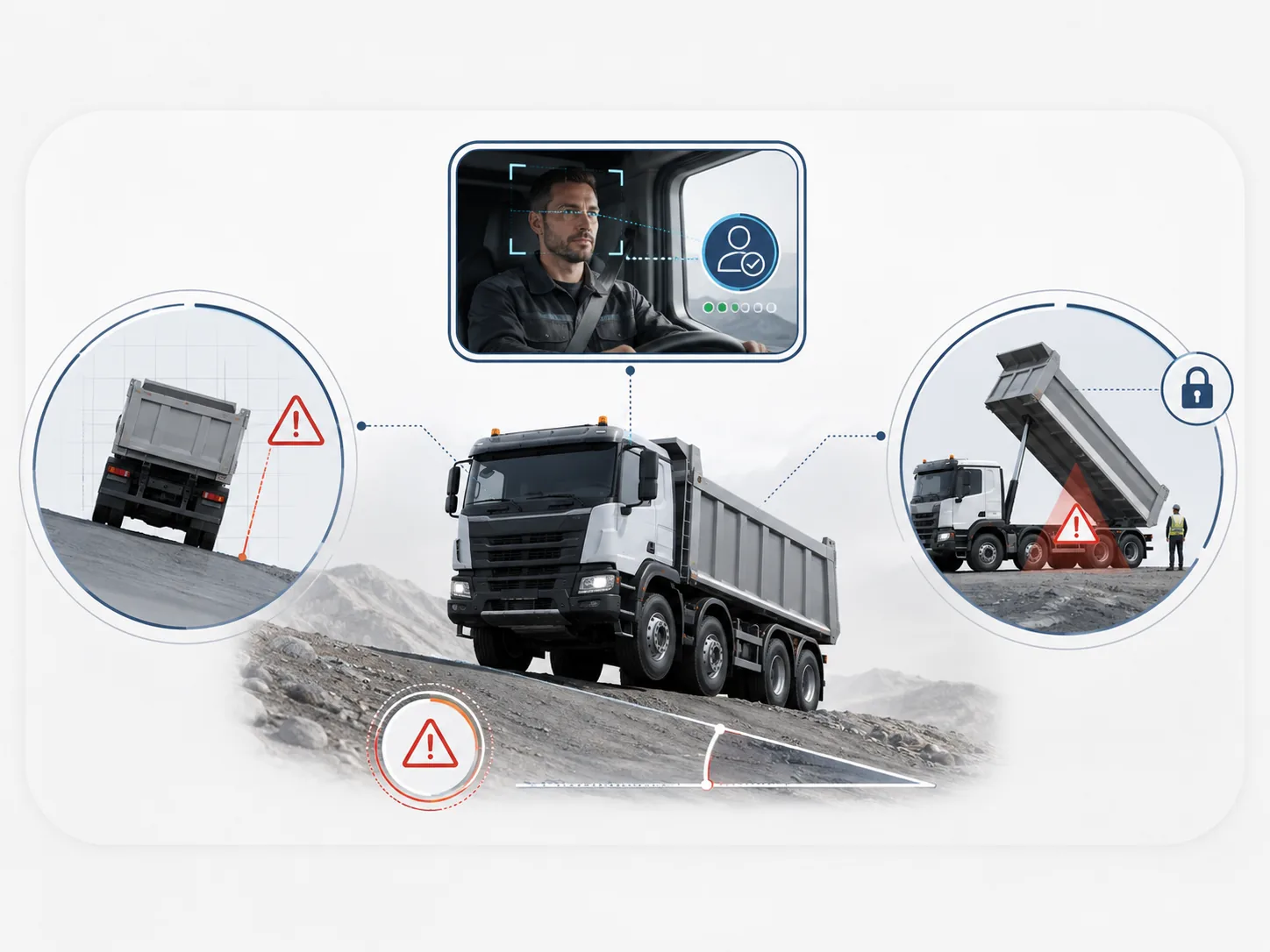
A body raised on a slope, a body left up on the road, a tired driver looking at a phone, an operator climbing onto the load to pull the tarp.
 Fleet management software and operations panel
Data collection
 CAN bus telematics and vehicle tracking
Trip Counting Module
 Driver monitoring and vehicle camera system
 Hydraulic-to-electric fan conversion
Commercial vehicle safety systems and telematics for tipper, plant, mixer and bus fleets. Designed in Türkiye and built in our own facility.
Film: on a night shift at a construction site, tipper truck DT-03 gets ready to unload. As the body rises, the ground tilts sideways; when the lateral slope passes 5°, MetaDamper stops the lift, lowers the body and reports the event to MetaFMS. Leaving the site, the body is raised by mistake; when the speed passes 10 km/h, MetaDamper lowers it automatically and the truck passes under the bridge. At the loading site, while DT-07 is loaded, MetaControl opens and closes the tarp and the trip begins. On a climb, MetaCooler switches on the fans of a staff bus one by one. In the cab, the MetaVision driver camera detects distraction, phone use and smoking, warns the driver out loud and sends an alarm to MetaFMS. The route is followed on the MetaTrack map; when the truck leaves the dumping site, the trip is counted with its tonnage. The night's log is collected in MetaFMS and is in front of the decision maker in a report at 06:00.
The data is out on site. It just doesn't reach the people who decide.
Fleets know where a vehicle is, not what it is doing. Metadiag was built for that gap.
Location, engine data, video, tipping and trips, all in one panel that reaches the people who decide.
01 The whole fleet on one screen

Mounted on the chassis of tipper trucks, semi-trailers and trailers, and fitted to every tipper truck brand.


Figures are from one customer's MetaFMS panel: 279 and 81 from a period summary, 107 from one vehicle's risk detail. Each record is a moment when the body was stopped from rising in a risky condition. Fleet and driver details are not shared, and the numbers vary by fleet and period. The tailgate check comes with the Wireless Sensors package and is not recommended for chain or manually opened tailgates.

A 6-axis sensor tracks lateral and fore–aft tilt separately. At the threshold it warns with light and buzzer, cuts the lift air and lowers the body if needed.
Ground slope plus body angle never passes 55°. The body will not rise before the tailgate opens or while the truck is above a set speed.
The intervention happens on the vehicle without waiting for a connection. Tilt values and interventions are logged with a timestamp and appear on the panel in fleets using MetaFMS.
The AI-assisted DMS camera detects fatigue, phone use, smoking and unfastened seat belts; it gives the driver an audible warning, records the event and sends an alarm to MetaFMS.


Figures are real records from one fleet's MetaVision driver analysis panel over a single period. The remaining violations are 2,036 smoking, 1,247 sleep detections and 740 distraction events. Fleet and driver details are not shared, and the numbers vary by fleet and period.

Fatigue and drowsiness, distraction, phone use, smoking, unfastened seat belts and speeding are detected in real time. If the camera is blocked, turned away or fails, the system raises a warning and the vehicle is flagged as needing a check.
1080P cameras record the cab and the vehicle's surroundings, and internal storage expandable to 512 GB keeps up to 60 days of footage. Video, CAN data and location come together in the same event record.
When the driver presses the emergency button, the vehicle's speed, position and time reach the operator at once. Where there is no signal, recordings stay on the device and are sent to MetaFMS in full once the connection returns.
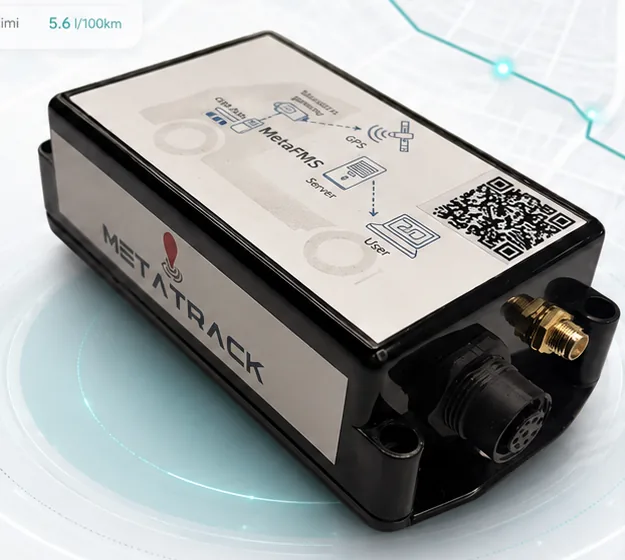
From trucks to construction machinery and generators, every unit's GPS position meets the engine and fuel data read from its CAN bus in the MetaFMS panel.


Figures come from one real vehicle's weekly MetaFMS idling report (6–11 October 2025, 6 days); idling was about 10.7% of working time. This is a single vehicle, not a fleet average, and results vary by vehicle, job and period. Vehicle and fleet details are not shared.

The unit reads more than 150 CAN parameters from the CAN bus / J1939 line, led by fuel, tonnage and fault codes, ties them to the GPS position and sends them to MetaFMS over 4G. Tonnage is the vehicle's own data and has a margin of error. The items available depend on the vehicle's CAN structure.
Idling time, fuel use and past routes are reported per vehicle, and routes can be replayed at adjustable speed. Reports run daily, weekly or monthly.
At mines, quarries and other sites without coverage, data is kept on the unit and sent to MetaFMS once the connection returns. Engine limit breaches are reported with threshold and measured value, and faults appear as alarms in the panel.
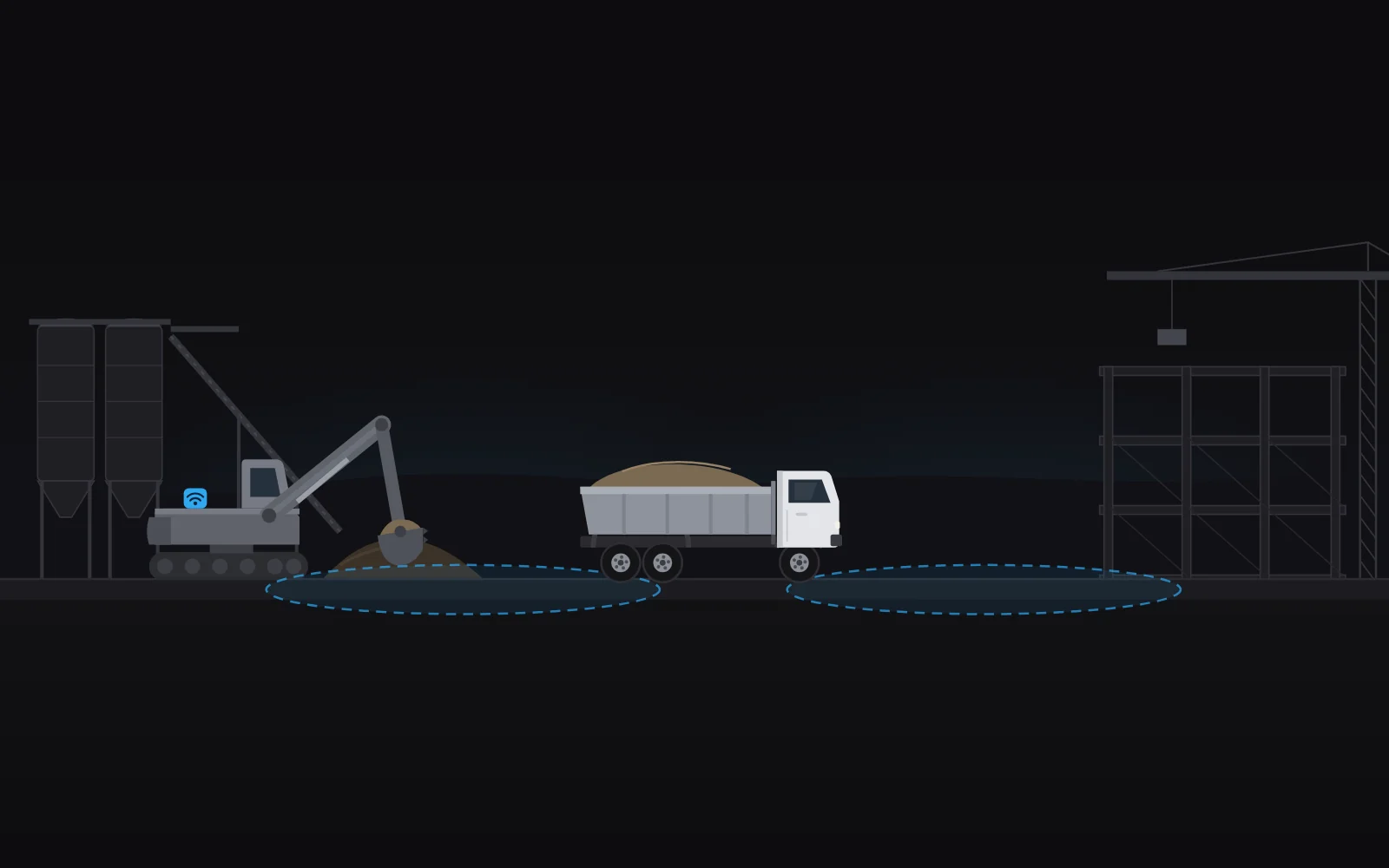
A zone is set for the loading site and one for the dumping site; each time a tipper, concrete mixer, water or fuel tanker completes a trip between them, the trip, its times and the loading machine are written to MetaFMS automatically.


Figures come from one concrete plant's trip history screen: 59 is the plant's trip count for 10 March to 9 April 2026; 32, 8 and 2 minutes are the measurements of a single trip on 2 April 2026. Customer and vehicle details are not shared, and the numbers vary by facility, zone settings and period.
The vehicle is loaded at the loading site, drives to the dumping site and unloads. When it leaves the dumping site the trip is complete and the trip number goes up by one. The same algorithm works for tippers, mixers and tankers.
The Trip Counting Sensor on the loading machine records the machine and the truck of each trip together; the report shows how many times each truck was loaded.
The trip card shows the start and end points, loading time and total trip time separately. Daily, weekly and monthly reports show whether time is lost at the loading site, on the road or at the dumping site.
The motorised tarp is made to fit each body, and the driver covers the load from the control panel or the wireless remote without climbing onto it.


These are technical values from the Metadiag product catalogue and product file, not field measurements. MetaControl runs on the vehicle with its own controls and has no screen in the MetaFMS panel.

The driver gives the command at a single touch from the control panel or the wireless remote. The tarp stops wherever needed, and the motor stops by itself when it is fully open or closed.
Closing no longer depends on the driver remembering it. The integration is optional, and MetaControl also works on its own.
In Türkiye, Article 18 of Law No. 7574 rewrote Article 65/1-h of the Highway Traffic Law: loading a vehicle without proper lashing and securing, so that the load can spill or scatter, is prohibited. Some public procurement specifications may call for a tarp operated from the cab.
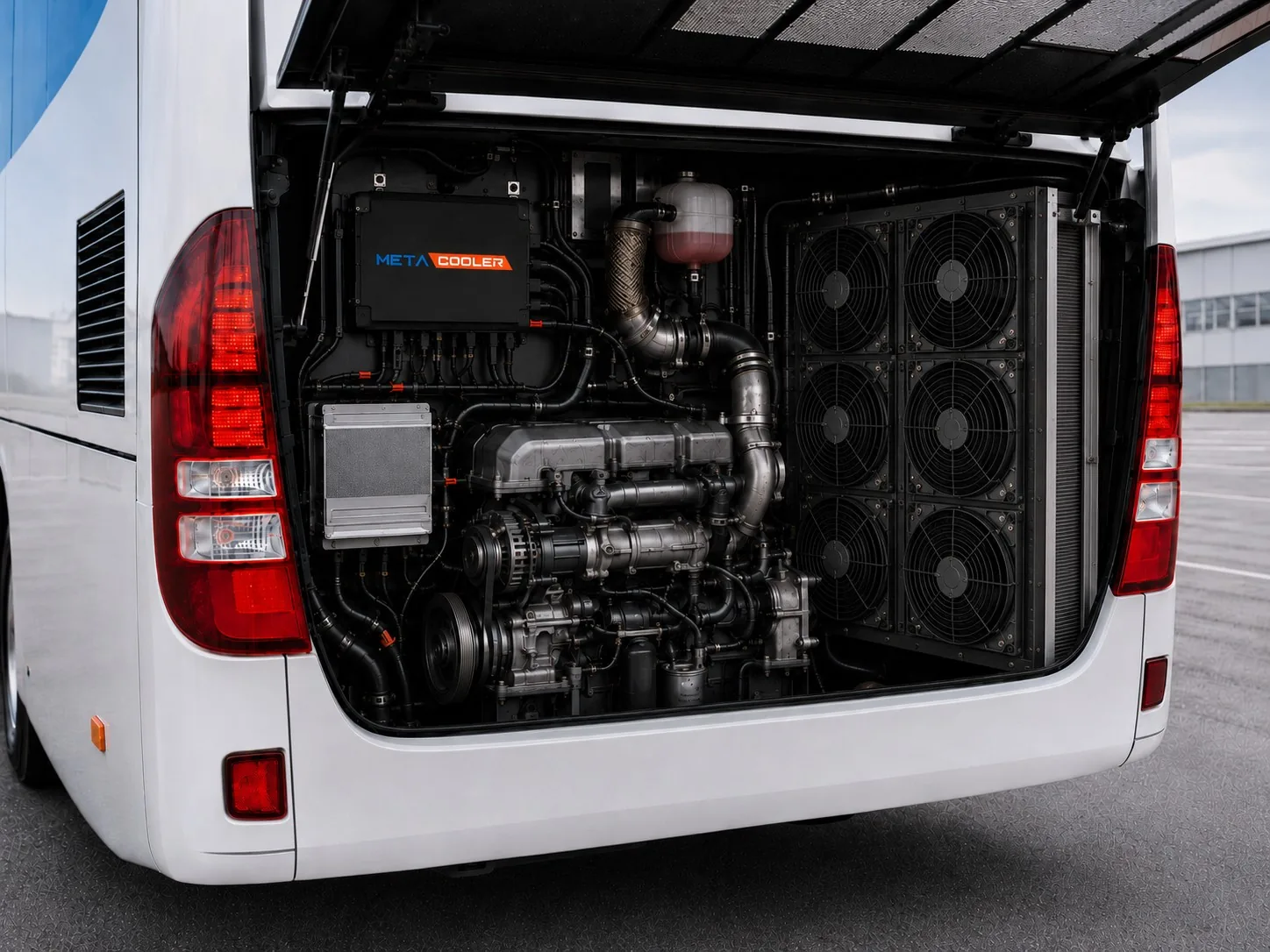
It converts the hydrostatic fan drive on buses and heavy commercial vehicles into an electric fan array and runs the fans on the vehicle's own CAN/J1939 data, in stages and only as much as needed.


Figures come from Metadiag's field measurements on a bus. They were taken by hand at fixed points with the radiator and intercooler clean, coolant at 80 °C and the electric fans at full speed, and do not show airflow volume or heat rejection. Suction speed at the radiator face stayed below the hydrostatic reference with both arrays. The electrical load the arrays add was measured too: at 1,600 rpm, total alternator current rose from 163.9 A to 183.8 A with array A and to 292.9 A with array B. The field footage and photos above are from a converted vehicle; the number of fans in the animation is illustrative.

In the prototype logic the fans engage once coolant passes 70 °C with the engine above 550 rpm; thresholds are calibrated for each vehicle. They start one after another, 200–1000 ms apart, and PWM matches their speed to demand.
If CAN data is lost, the fans run at a safe 70–100% speed depending on the application; the driver is warned and the event is logged. If the coolant sensor fails, engine oil temperature can serve as backup data.
Eight hydrostatic parts come out, including the pump, hydraulic fan motor, oil lines and reserve oil tank; an electric fan array and the MetaCooler ECU in an IP68-rated enclosure go in. Decisions are made on the vehicle, with no need for a connection.
The body starts to rise. The ground looks level. A 6-axis sensor keeps measuring the truck's lateral and fore–aft tilt.
A wheel sinks. On loose fill one wheel settles and the truck starts to lean. It is hard to notice from the cab.
At 5°: warning and stop. The moment lateral tilt passes the threshold, a light and buzzer warn the driver and the air to the lift is cut.
The body comes down on its own. If the risk appears after the lift, the raised body is lowered automatically and the truck regains its stability. It does not just warn, it acts.
Every intervention is recorded. Tilt values and the moment of intervention are logged with a timestamp. In fleets using MetaFMS the event appears on the panel.
Default thresholds: 5° lateral, 13° fore–aft; both can be set for each site. Illustrative sequence.
If the slope is risky, the body stays down. If risk appears while lifting, it stops and lowers.

AI watches the driver, warns out loud on fatigue, phone use or an unfastened belt, records the event and alerts the office.
It combines GPS position with the vehicle's CAN bus data: fuel, idling, engine hours, fault codes.
The loading site is one facility, the dumping site another. One trip-counting algorithm for tippers, concrete mixers, water tankers and fuel tankers.
The tarp opens and closes from the cab or by remote from up to 50 m, without anyone climbing onto the load.
It converts the hydrostatic fan drive to electric and runs it in stages on the vehicle's own CAN data.
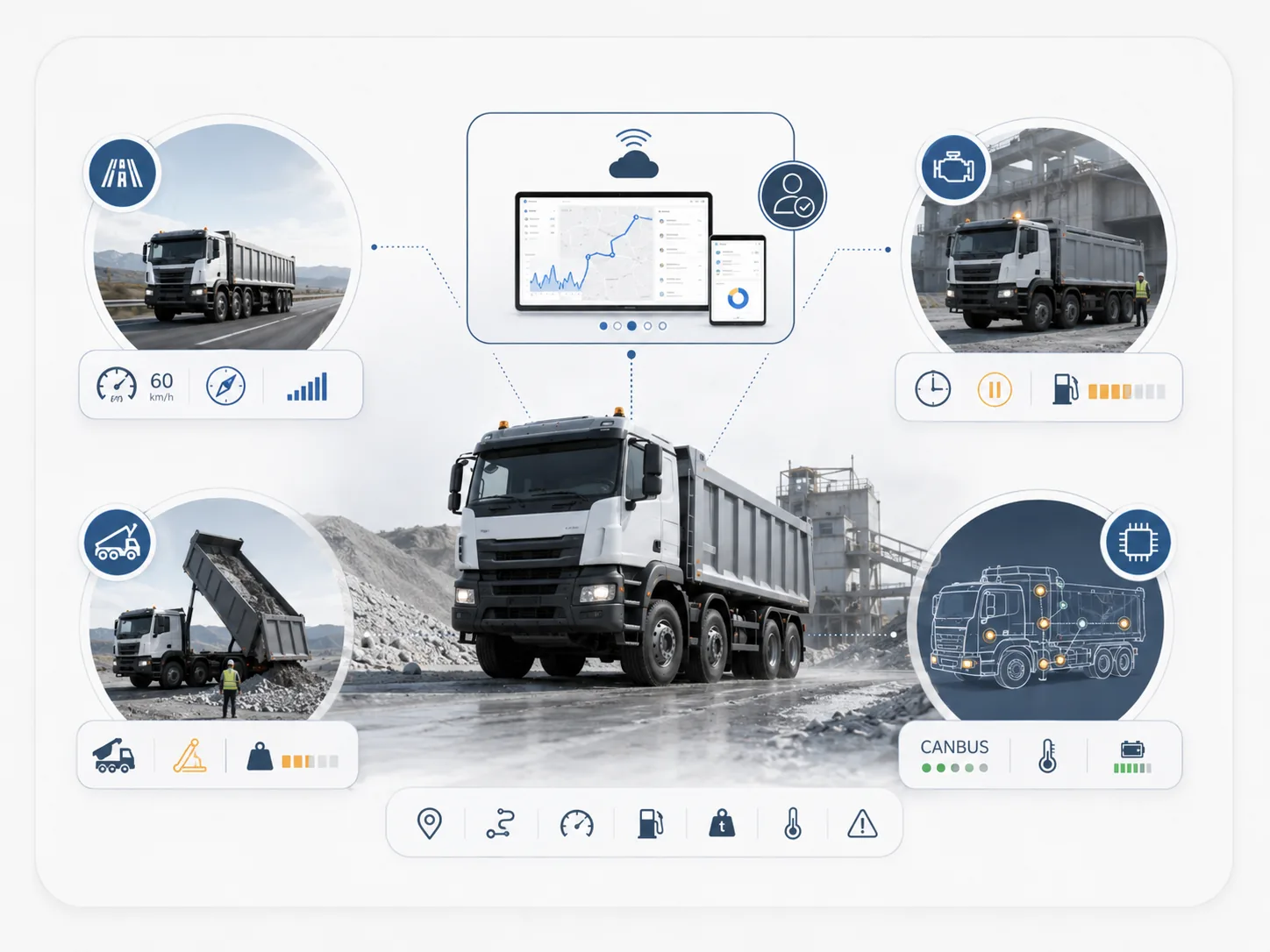
Our product family grew out of these five problems. Each card shows the products that address it.
A body raised on a slope, a body left up on the road, a tired driver looking at a phone, an operator climbing onto the load to pull the tarp.
Location is known, but engine, load, fuel, driver and body status never reach the office. Managers run the site by phone and hear about incidents afterwards.
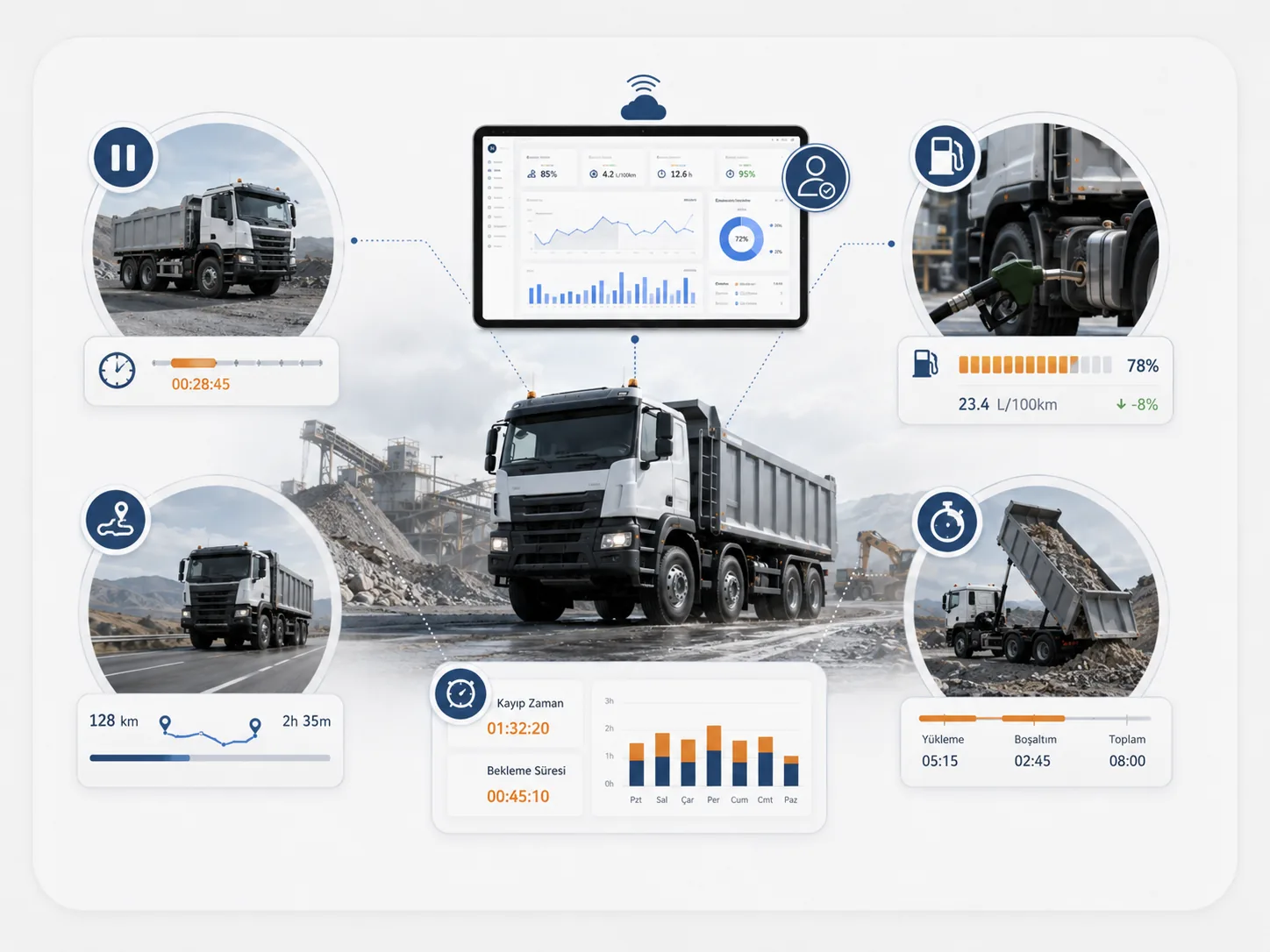
Engines run with no work being done, trips are counted by hand, mixers wait at the plant. Nobody can measure where the time goes.
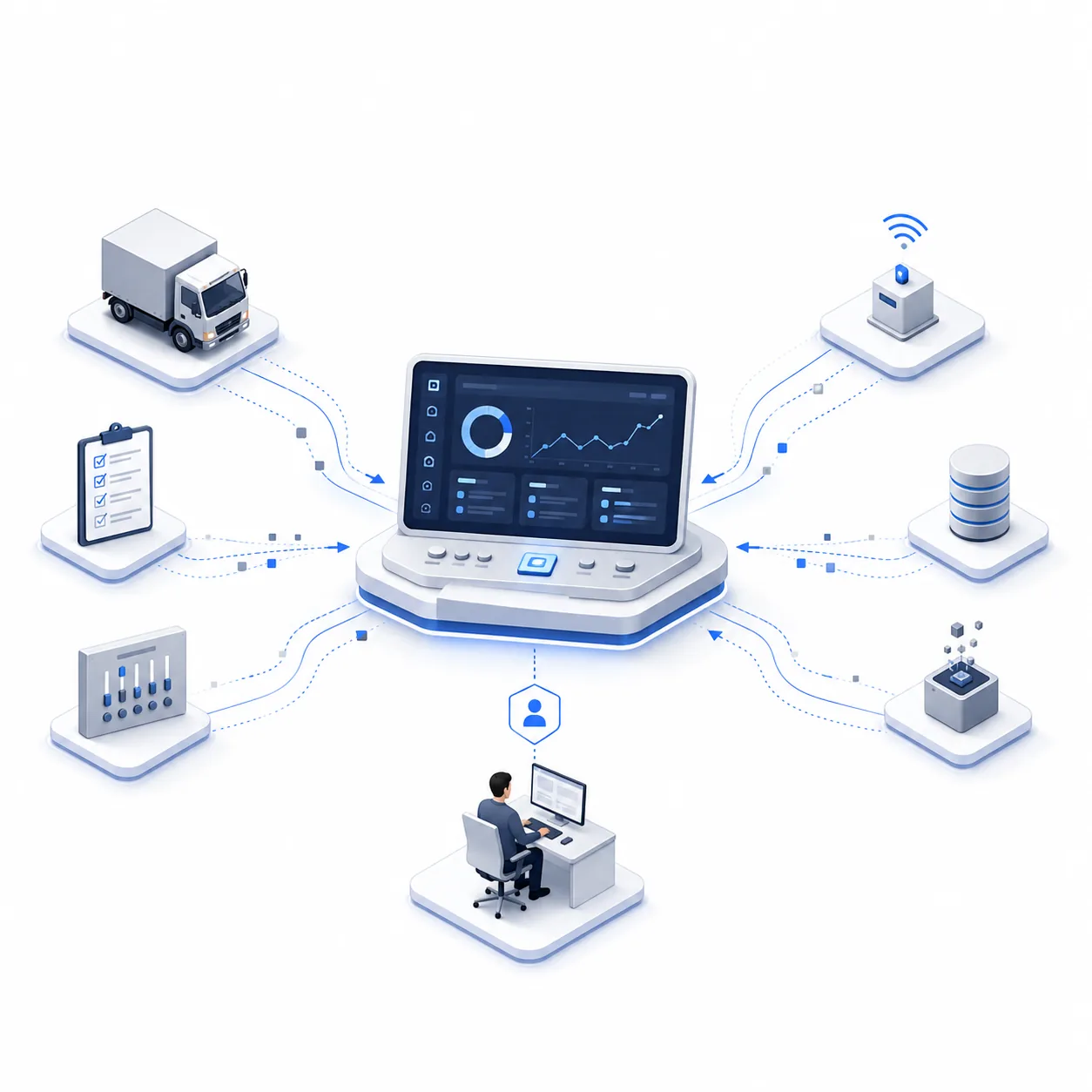
A separate screen for every device, paper checklists, trip and weighbridge records kept by hand. Without a standard or a record, nobody can say what happened or why.
Hydrostatic fans that can spin at full speed even on a cold engine, fault codes noticed too late, low AdBlue. The result is extra fuel, unplanned downtime and higher repair bills.
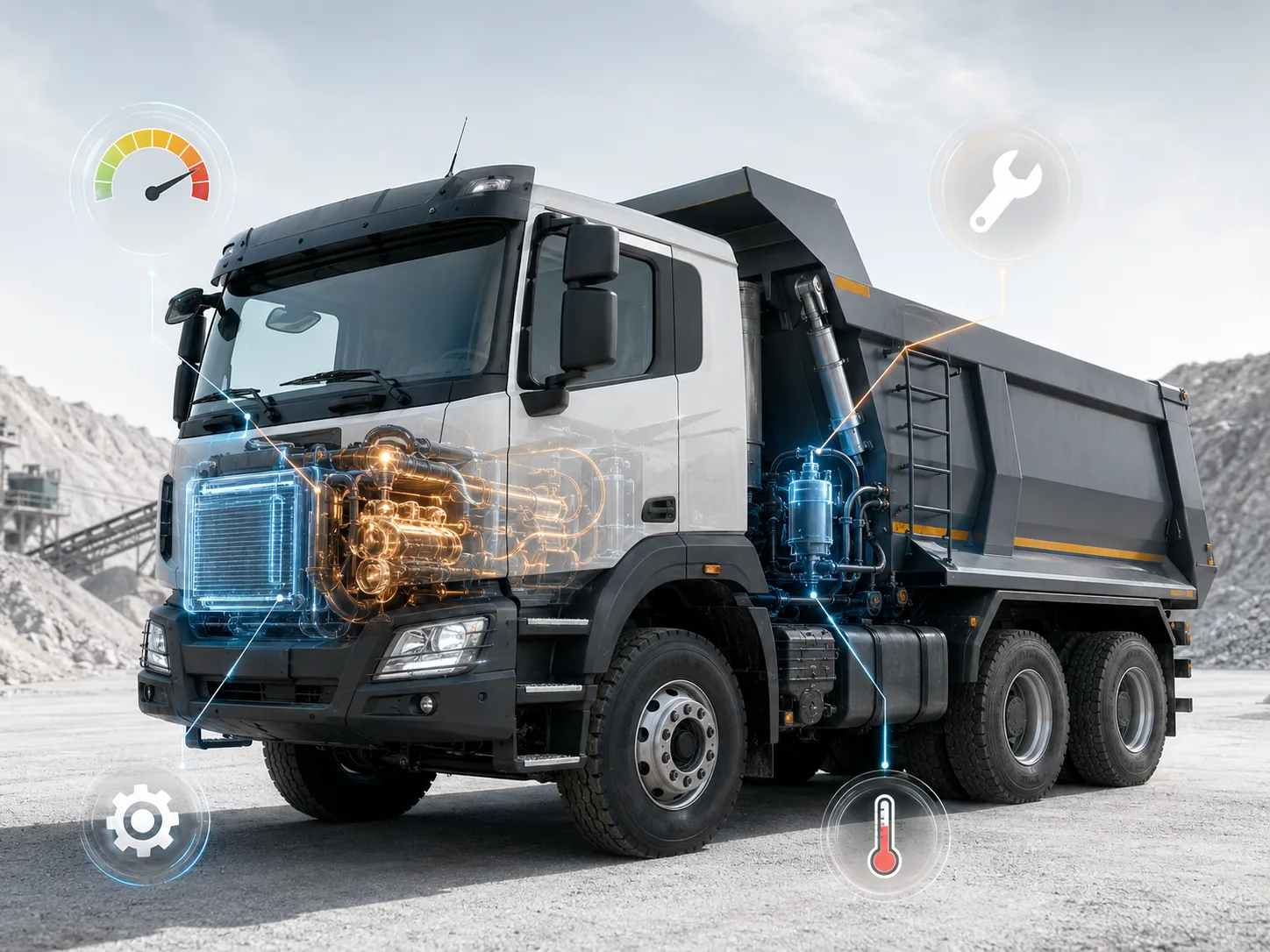
The same product family, combined differently for each kind of site.
Reducing rollover risk and measuring the load-and-haul cycle.
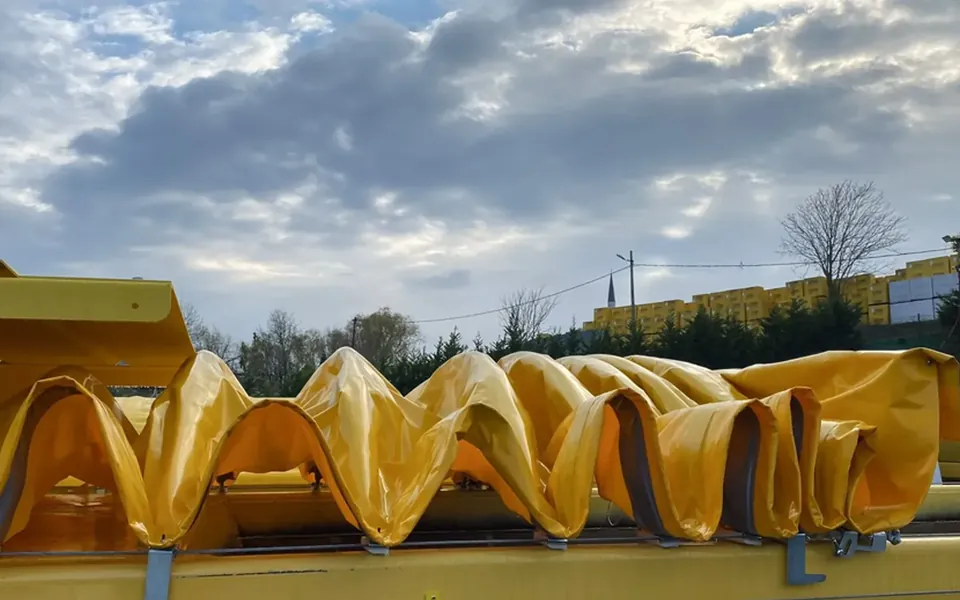
Closing the risk of raised bodies and uncovered loads in the city, with record-based reporting.
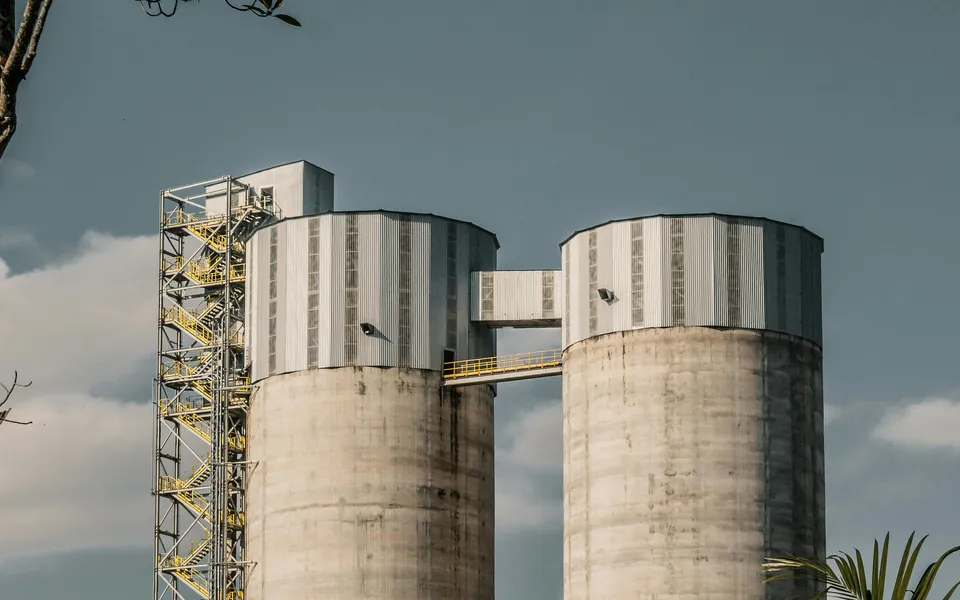
Seeing the plant-to-pump cycle, fuel and load per trip.
Driver attention, event recording, emergency alerts and hydrostatic fan risk.

Driver safety, fuel and idling.
Monitoring site equipment, generators included, from one panel.
Hardware, embedded software and manufacturing under one roof. Our certificates are issued per product and model, and we publish each with its number and validity.
ISO 9001, Domestic Goods and Technological Product certificates Company
Quality management system
26.02590 · 16 Apr 2027
 MetaDamper
Patent
TR 2024 015433 B · 7 Nov 2044
 MetaDamper
Trademark registration
2025 096691 · 30 Jul 2035
 MetaDamper
CE attestation of conformity
E-2026-238 · 24 Jun 2027
 MetaDamper
Domestic Goods Certificate: hardware
2026108304604 · 3 Aug 2027
 MetaDamper
Domestic Goods Certificate: software
2026108304606 · 29 Jul 2027
 MetaDamper
Technological Product Experience Certificate
TÜRD2026/83 · 22 Nov 2028
 MetaTrack
Domestic Goods Certificate: hardware
2026108304605 · 3 Aug 2027
 MetaTrack
Domestic Goods Certificate: software
2026108304586 · 29 Jul 2027
 MetaTrack
Technological Product Certificate
TÜR2026/228 · No expiry
 MetaTrack
Technological Product Experience Certificate
TÜRD2026/84 · 3 Nov 2030
 MetaVision
Domestic Goods Certificate: hardware
2026108304602 · 3 Aug 2027
 MetaVision
Domestic Goods Certificate: software
2026108304601 · 29 Jul 2027
 MetaVision
Technological Product Certificate
TÜR2026/229 · No expiry
 MetaVision
Technological Product Experience Certificate
TÜRD2026/85 · 15 Oct 2030
 MetaCooler
Domestic Goods Certificate: software
2026108304588 · 29 Jul 2027
 MetaCooler
Technological Product Certificate
TÜR2026/230 · No expiry
 MetaCooler
PCT international search report
PCT/TR2025/051967
 MetaCooler
Patent application
2024/021239
The Metadiag product range covers tipping operations, driver attention, load covering and fan control. Location, vehicle data and event records make site operations visible. Each product is described on the Metadiag products page.
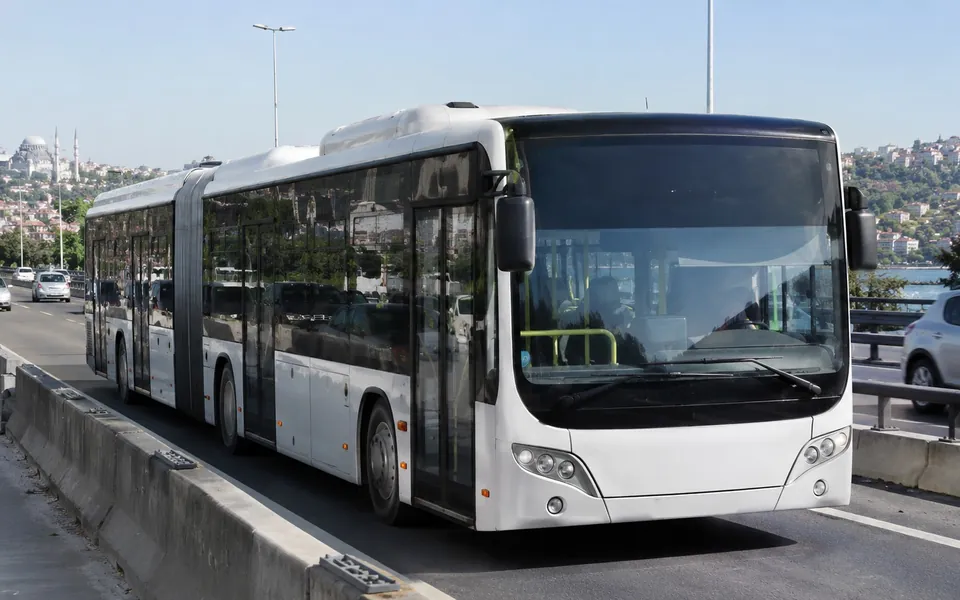
They are used on tipper trucks, construction machinery, concrete mixers, buses, cars and light commercial vehicles. The systems are retrofitted to existing vehicles regardless of brand. The products recommended for your vehicle are listed on the solutions by vehicle type page.
Data from MetaDamper, MetaTrack, MetaVision and the Trip Counting Module comes together in the MetaFMS panel, on one map and in shared reports. MetaDamper, MetaControl and MetaCooler also work on their own on the vehicle; MetaDamper and MetaCooler make their decisions without an internet connection.
Our products are designed in Türkiye. Our R&D team at YTU Ikitelli Technopark in Istanbul develops the on-vehicle electronics, embedded software and the MetaFMS platform, and we manufacture our electronic systems in our own facility. Design, development and manufacturing are certified to EN ISO 9001:2015; product certificates are listed with their numbers and validity on the certificates page.
It starts with a site survey request: we review your vehicles on site and show the MetaFMS panel and the on-vehicle systems in a live demo. A pilot with a limited set of vehicles follows, and we prepare a proposal for your fleet. To ask for a survey or a demo, contact us.
We review your vehicles on site, then plan the survey, installation and reporting around the way you work.


